Oral Histories
Adin White
- Title
- Adin White
- Abstract
- This oral history features Chico State student Adin White, former president of the Anthropology Club, whose leadership role ultimately connected him with SWANASA, a recently recognized student organization focused on humanizing and educating the campus community about the Middle East. This interview was conducted for Public History’s Free Speech Oral History Project at California State University, Chico. The purpose of this interview was to document Adin’s experiences with student activism and free speech on campus during the period surrounding Gaza-related demonstrations. The interview begins with an overview of Adin’s involvement with SWANASA and how that involvement led him to participate in a series of demonstrations on campus concerning Gaza. Adin described these demonstrations as deeply empowering, highlighting the meaningful conversations that arose among students with differing viewpoints. He also reflected on his disappointment with what he perceived as widespread student disengagement, noting that many students did not seem invested in or affected by the issues being raised. Despite this, Adin shared that he did not personally feel restricted in expressing his views. He emphasized the support he received from faculty members who encouraged student participation in activism, as well as his appreciation for President Perez’s attendance at multiple events, which he interpreted as signaling institutional support for free expression. The interview then turned to Adin’s broader views on free speech and student activism at Chico State. When asked how activism could be strengthened on campus, Adin argued that dissent and disruption are essential components of effective advocacy. He stated that “you must disrupt the status quo in order to draw attention,” asserting that when established order becomes oppressive, free speech must inherently take on disruptive dimensions. According to Adin, protecting both students and the longevity of free expression requires allowing dissent and making space for disruptive forms of speech. Finally, Adin commented on the Public History class’s proposed monument project. He expressed strong support for the podium-style design, believing it would invite ongoing participation and actively regenerate free speech rather than merely preserve it. In his view, the podium symbolizes a reinvigoration of open dialogue and reinforces the importance of maintaining student voice in public spaces.
- Interviewee
- Adin White
- Interviewer
- Clare Schaefer
- Date Created
- October 29, 2025
- Format
- m4a
- Length
- 28 minutes, 37 seconds
- Library of Congress Subject Heading
-
Cultural centers (Institutions)—California
Student activities
Social activism
Constitutional principles - Copyright
- Researchers may make free and open use of the Meriam Library’s digitized public domain materials without obtaining permission. However, some materials in our online collections may be protected by U.S. copyright law (Title 17, U.S.C.). Use or reproduction of materials protected by copyright beyond that allowed by fair use (Title 17, U.S.C. § 107) requires permission from the copyright owners. The use or reproduction of some materials may also be restricted by terms of the Meriam Library’s gift or purchase agreements. Responsibility for determining rights status and permissibility of any use or reproduction rests exclusively with the researcher. The Library asks to be credited as the materials source whenever possible.
- Collection number
- Chico State Free Speech History
- Collection Project
- Chico State Free Speech History
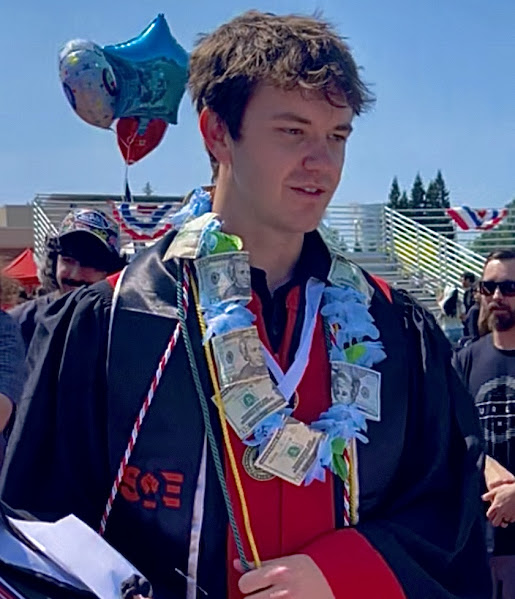
Dr. Kenneth Edson
- Title
- Dr. Kenneth Edson
- Abstract
- An oral history with Dr. Kenneth Edson, a Chico State alumnus who attended Chico State from 1955 to 1957 for a credential in counseling. After receiving his Masters and eventual doctoral degree in psychology, Dr. Kenneth Edson then went on to work for Chico State for nearly 30 years, starting out working as a student employed by the college test office and finalizing his career as the Associate Dean of Students. Under his last position, Dr. Kenneth Edson consistently communicated with other schools and had a direct impact on student affairs, including protests, the Anti-Vietnam protests in particular. The purpose of this interview was to collect information on Dr. Edson’s role in regulating student Anti-Vietnam protests, providing an insider view of what student free speech looked like from a faculty member’s perspective. In addition, his oral report will be archived for an ongoing project on the history of student free speech at Chico State. Although activism was not consistently exercised during Kenneth Edson’s enrollment from 1955 to 1957, his role as Associate Dean of Students during times of political unrest (1976–1978) put him straight in the middle of Anti-Vietnam protests conducted on campus. He recalled a protest during 1967 that sparked his role as a regulator of student protests. A radio station in Paradise, a largely Republican community at the time, reported that there were communists at Chico State in response to Chico State students protesting the Vietnam War in 1967. This sparked outrage for the Paradise community, and a small group of older protestors began to assemble on Chico State campus, forming a counter-protest to the Anti-Vietnam student protests. As Associate Dean of Students, Dr. Kenneth Edson was sent out to regulate the protests. Prior to this event, there were no formally written guidelines on campus free speech, and it was up to Dr. Kenneth Edson to form the time, place, and manner regulations on how future protests were to be conducted. During Dr. Kenneth Edson’s time as a student and as an eventual faculty member, he saw a cultural shift in student life. A population influx from urban areas such as San Francisco switched the otherwise conservative culture of protest to a resilient student body of protestors on Chico State campus. Dr. Edson sees the monument as a great opportunity to highlight influential people in these protests and emphasizes that “more than just school is happening here,” students are trying to make a difference by practicing their right to free speech.
- Interviewee
- Dr. Kenneth Edson
- Interviewer
- Larisa Robinson
- Date Created
- November 19, 2025
- Format
- m4a
- Length
- 49 minutes, 41 seconds
- Library of Congress Subject Heading
-
Cultural centers (Institutions)—California
United States local history—California
Student activities
Social activism
Vietnam War, 1961–1975—Protest movements, College students—Political activity—United States, Oral histories. - Copyright
- Researchers may make free and open use of the Meriam Library’s digitized public domain materials without obtaining permission. However, some materials in our online collections may be protected by U.S. copyright law (Title 17, U.S.C.). Use or reproduction of materials protected by copyright beyond that allowed by fair use (Title 17, U.S.C. § 107) requires permission from the copyright owners. The use or reproduction of some materials may also be restricted by terms of the Meriam Library’s gift or purchase agreements. Responsibility for determining rights status and permissibility of any use or reproduction rests exclusively with the researcher. The Library asks to be credited as the materials source whenever possible.
- Collection number
- Chico State Free Speech History
- Collection Project
- Chico State Free Speech History
Terris McMahan Grimes and Diane Miller
- Title
- Terris McMahan Grimes and Diane Miller
- Abstract
- In this oral history interview, alumnae Terris McMahan Grimes and Diane Miller reflect on their experiences as Black women and first-gen students at Chico State from 1969 to 1973. They describe arriving from West Oakland and South Central Los Angeles, navigating limited institutional guidance, and finding community and assistance through the Black Student Union and the “Black House.” The narrators recall their involvement in nearby Chapman Town, including a student-organized free breakfast program at a local Black church– modeled on Black Panther initiatives– that primarily served poor white children, as well as the creation of a literary anthology funded by student government. Grimes and Miller discuss campus and national protest cultures surrounding the Vietnam War, farmworker organizing, civil rights, and Indigenous activism, alongside feelings of social exclusion and safety concerns within Chico’s predominantly white party culture. They describe both quiet and overt forms of resistance– challenging course reading lists, attending talks by prominent social justice-oriented figures, mentoring local children, and building spaces for Black cultural life– as expressions of free speech and student activism. The interview concludes with their reflections on social media, intergroup dialogue, and the persistence of structural inequities. Grimes and Miller emphasize that meaningful change depends on sustained engagement and that every voice and every contribution, whether highly visible or quietly behind the scenes, is necessary in ongoing struggles for justice.
- Interviewee
- Terris McMahan Grimes and Diane Miller
- Interviewer
- Septen Flores
- Date Created
- October 24, 2025
- Format
- m4a
- Length
- 1 hour, 21 minutes, 18 seconds
- Library of Congress Subject Heading
-
Cultural centers (Institutions)—California
United States local history—California
Student activities
Social activism - Copyright
- Researchers may make free and open use of the Meriam Library’s digitized public domain materials without obtaining permission. However, some materials in our online collections may be protected by U.S. copyright law (Title 17, U.S.C.). Use or reproduction of materials protected by copyright beyond that allowed by fair use (Title 17, U.S.C. § 107) requires permission from the copyright owners. The use or reproduction of some materials may also be restricted by terms of the Meriam Library’s gift or purchase agreements. Responsibility for determining rights status and permissibility of any use or reproduction rests exclusively with the researcher. The Library asks to be credited as the materials source whenever possible.
- Collection number
- Chico State Free Speech History
- Collection Project
- Chico State Free Speech History
